

Mustache Transplantation: Complete Your Charisma by Filling in the Gaps on Your Face

Mustache Transplantation: Complete Your Charisma by Filling in the Gaps on Your Face
Mustache Transplantation – In male facial aesthetics, the mustache is not just a collection of hairs but one of the most prominent reflections of character, expression, and charisma. This small area between the upper lip and the nose directly affects the face’s symmetry and balance. However, for many men, the complete absence of hair or the presence of regional gaps (thinning) in the mustache area due to genetic factors, scars, burns, or hormonal reasons is a common condition that negatively affects self-confidence. Mustache transplantation is a special operation that offers a permanent, natural, and artistic solution to this aesthetic problem, utilizing the highest level of micro-surgical precision. As the Görkem Kazan Hair Transplant clinic, we explain how mustache transplantation acts as a “charisma completer,” the artistic subtleties of the operation, and the details of this life-changing process.
Mustache transplantation is not merely about filling in gaps; it requires a completely personalized design that is appropriate for the patient’s facial features, expectations, and age. It is the process of harvesting DHT-resistant hair follicles (grafts) one by one from the back of the neck and transferring them to the mustache area at the correct angle and direction. Success is measured not only by the survival of the transplanted grafts but also by how flawlessly the result mimics the natural mustache texture, making it indistinguishable.
Reasons That Necessitate Mustache Transplantation
There are various reasons why patients seek mustache transplantation. Correctly diagnosing these reasons is the first step in planning the operation:
- Genetic Factors: This is the most common reason. It is the condition where no hair follicles develop in the mustache area after puberty, or they remain very thin and sparse due to hereditary predisposition.
- Scars (Scar Tissue): Scars left on the upper lip area from a childhood accident, fall, burn, or surgical intervention (especially cleft lip surgeries) prevent hair follicles from growing in that area. It is possible to transplant a mustache over these scars using SCAR transplantation protocols.
- Hormonal Imbalances: Past and treated hormonal disorders may have permanently affected mustache development.
- Trichotillomania (Hair-Pulling Disorder): A stress-induced hair-pulling habit can cause permanent gaps in the mustache area.
The Artistic Subtleties of the Operation: How is a Natural Mustache Created?
What makes mustache transplantation more delicate than a hair transplant is its location in the most central and most noticeable area of the face. To achieve a natural result, the surgeon must work like a sculptor:
1. Use of Single Grafts Only:
Natural mustache hairs grow individually, not in groups of 2 or 3 like scalp hair. Therefore, only single-hair follicles, carefully selected from the donor area, must be used in the operation. Using multiple grafts would result in an artificial and coarse appearance in the mustache.
2. Mastery of Angle and Direction:
This is the most critical and challenging stage of mustache transplantation. Mustache hairs grow at different angles in different areas:
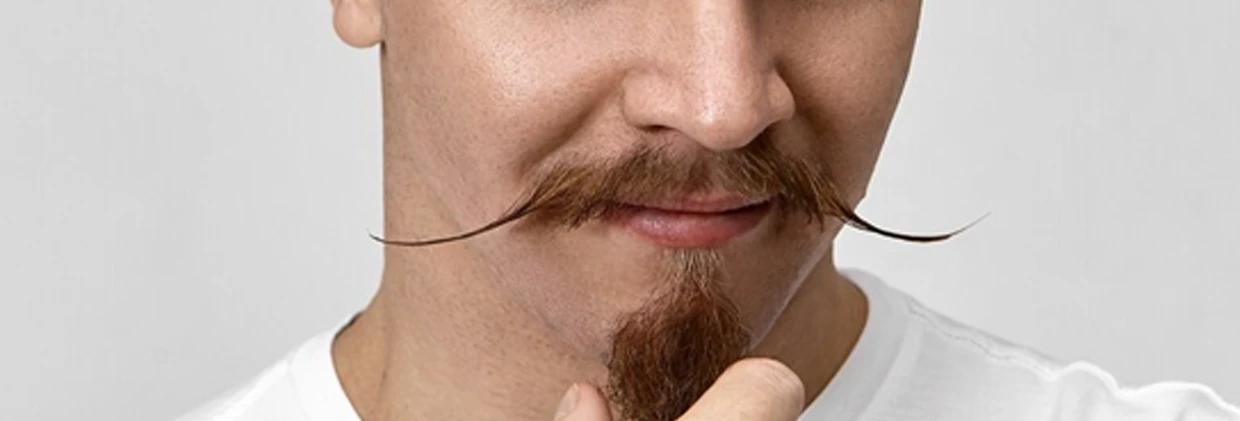
- Hairs in the central part near the base of the nose point slightly downwards.
- As you move towards the sides, the angle of the hairs becomes progressively more horizontal and outward.
The surgeon must implant each follicle in line with this natural flow, at an angle almost parallel to the skin (10-20 degrees), to prevent the result from looking stiff and artificial like bristles.
3. The Necessity of the DHI Technique:
The DHI (Direct Hair Implantation) technique is almost always preferred for mustache transplantation to achieve this millimetric angle and direction control. The precise tip of the Choi Implanter Pen allows the surgeon to implant the follicle directly into the skin at the desired angle without making a prior incision. This both reduces tissue trauma and maximizes artistic control.
The Step-by-Step Mustache Transplant Process: From Consultation to Result
A mustache transplant is a comfortable operation that usually takes 3 to 5 hours.
- Consultation and Design: The first step is for the patient and surgeon to come together to design the ideal mustache shape, borders, and density. The patient’s facial structure and expectations are taken into account at this stage. Then, a hair analysis is performed to assess the adequacy of the donor area (back of the head).
- Operation Day: The procedure is performed under local anesthesia, so the patient feels no pain. Between 300 and 800 single grafts are typically harvested from the back of the head using the FUE technique. These collected grafts are then implanted one by one into the designed mustache area using the DHI technique.
- Recovery Process:
- First Week: Slight redness, swelling, and pinhead-sized scabs are seen in the transplanted area. These scabs shed within 7-10 days with special washing procedures.
- Shock Loss (1-3 Weeks): The transplanted hairs temporarily shed. This is a normal sign that the follicles have entered the resting phase.
- Permanent Growth (3-6 Months): The first permanent mustache hairs begin to emerge.
- Final Result (8-12 Months): The mustache reaches its full density, thickness, and natural appearance.
It is very important to be gentle for the first few days after the operation to protect the transplanted follicles and to avoid smoking and alcohol. Organizations like the International Society of Hair Restoration Surgery (ISHRS) emphasize that post-operative care in facial transplants directly affects the quality of the result.
What to Know After Mustache Transplantation
Since the transplanted mustache hairs are taken from the back of the head, they will continue to grow like scalp hair. Therefore, to maintain a natural mustache appearance, they need to be trimmed regularly (usually 1-2 times a week) with scissors. Over time and with regular shaving, the texture of the hairs will begin to more closely resemble the other hairs on the face.
Mustache transplantation not only fills the gaps on your face but also strengthens your expression and completes your charisma. To take your aesthetic appearance to the next level with this permanent and natural solution, you can create a personalized mustache transplantation plan by contacting the specialists at Görkem Kazan Hair Transplant.